

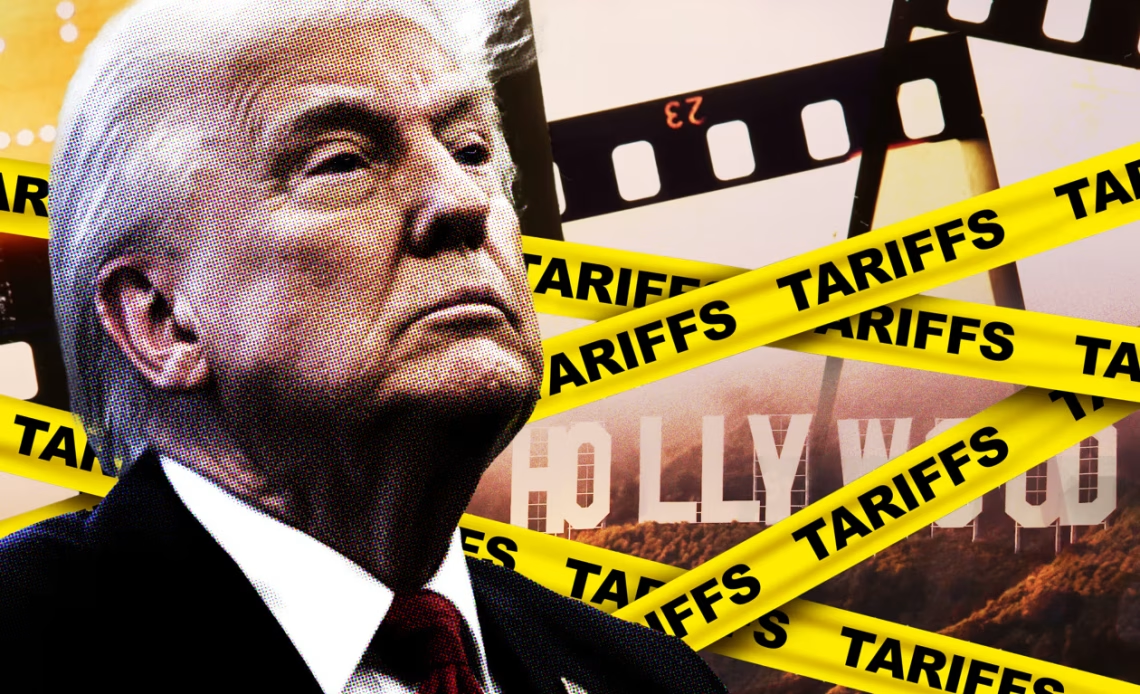
Trump wants to slap a 100% tariff on foreign films.
The economics make no sense.
I’ve been analyzing trade policy long enough to spot when something defies basic logic. This proposal doesn’t just bend the rules. It breaks them entirely.
The Numbers Tell a Different Story
Here’s what Trump isn’t mentioning. International markets account for over 70% of Hollywood’s total box office revenue. We’re talking about an industry that already dominates globally.
The U.S. film industry generated $22 billion in exports last year. That created a trade surplus of $15.3 billion.
Read that again. We’re winning this trade war before it starts.
Implementation Nightmare
The practical challenges expose deeper problems. How do you enforce a tariff on something that streams digitally? Movies don’t pass through ports like steel or soybeans.
Digital transmission creates enforcement challenges that trade experts struggle to define. We’re essentially trying to tax data packets.
The legal framework doesn’t exist. Traditional tariffs target goods crossing physical borders. Services operate in a completely different regulatory space.
Who Actually Pays
Tariffs always get passed to consumers. That’s Economics 101.
Your movie tickets get more expensive. Streaming subscriptions increase. The cost hits American families directly.
Meanwhile, major Hollywood productions filming overseas face immediate impacts. Christopher Nolan’s *The Odyssey* and Mel Gibson’s upcoming *Passion of the Christ* sequel are both shooting internationally. These aren’t foreign films. They’re American productions using global resources.
The Real Winners and Losers
Foreign competitors benefit from reduced American presence in their markets. If U.S. films become prohibitively expensive, local productions fill the gap.
We’re essentially subsidizing foreign film industries while damaging our own export advantage.
Canada’s film sector generates $11 billion nationwide. The U.K. has built massive production infrastructure. These countries will happily absorb market share we voluntarily surrender.
Alternative Solutions Exist
Congresswoman Laura Friedman, representing Burbank’s studio hub, offers a smarter approach. Instead of punitive tariffs, expand national film tax credits.
Incentivize domestic production without destroying international revenue streams. Support American workers without sabotaging American exports.
The policy goal makes sense. The execution method destroys the industry it claims to protect.
Broader Implications
This proposal signals a fundamental misunderstanding of how modern industries operate. Entertainment, technology, and services don’t follow manufacturing trade patterns.
Applying 20th-century tariff logic to 21st-century digital services creates more problems than solutions.
The announcement raises constitutional questions about presidential trade authority. Congress typically has jurisdiction over international commerce regulation.
The Bottom Line
Economic policy should solve real problems with practical solutions.
This tariff proposal fails both tests. It targets an industry where America already wins while creating implementation challenges that may prove impossible to resolve.
The result? Higher costs for consumers, reduced competitiveness for American studios, and strengthened foreign competitors.
Sometimes the simplest analysis reveals the deepest flaws. This policy makes American entertainment less competitive in the global market it currently dominates.
That’s not winning. That’s self-sabotage with extra steps.
